


Kamikaze is a Japanese word that is loosely translated as ‘Divine Wind‘. Originally the words referred to two typhoons that hit Japan in 13th century AD (they were considered as divine because they are said to have saved Japan from two attacking Mongol fleets).
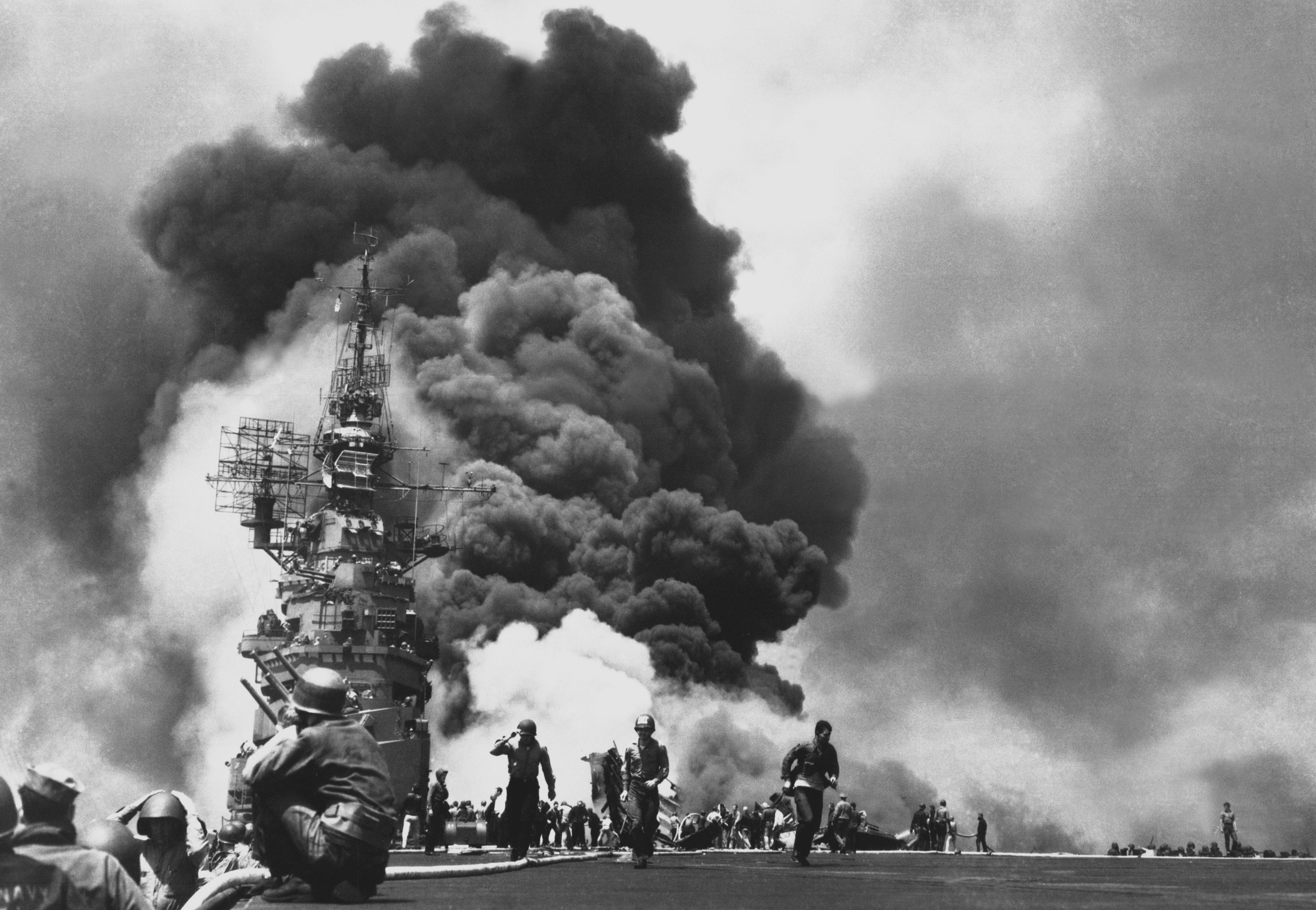 |
| USS Bunker Hill was hit by kamikazes piloted by Ensign Kiyoshi Ogawa and another airman on May 11, 1945. 389 personnel were killed or missing from a crew of 2,600. Photo taken from Wikimedia commons. |
But later the word kamikaze became famous because they referred to suicide attacks carried out by Japanese military aviators against the allied naval vessels during World War II. Fighter planes loaded with explosives crashed into US ships to do as much damage as possible. (I can’t help but think of Age of the Empires here, anyone familiar with the game will think of fire ships that one can build in game)
But now the Japanese word has been ‘borrowed’ by the English language to describe ‘a person or thing that behaves in a wildly reckless or destructive manner.’
Makes sense, I think. Though I am honestly fascinated by Japan, this whole Bushido (Samurai/Warrior) code scares me… It is ‘loyalty & honor until death.’
Yes, Islamic extremists aren’t the only one who can actually convince their people that dying is glorious, & that honor is the most important thing in life.
Also, why are the Japanese so fixated with honor that they would rather die than be dishonored? (Hara-kiri/Sepukku, anyone?)
Just some food for though.
Think about it!
xo


